History Of Lake Chatuge

The dam is made up of 21,900 cubic yards of concrete, and there was 362,466 cubic yards of earth excavation for the foundation.
Normal maximum pool for Lake Chatuge flood control holds 7,050 acre feet of water. Lake Chatuge has 1 enclosed water-cooled generator and a second generator that was added later.
Lake Chatuge has 128 miles of shoreline with 4 miles of island shoreline giving a total of 132 miles of shoreline. Chatuge Dam is 144 feet high, 2,850 feet long, and 980 feet wide at the base.
The reservoir is operated for many uses mostly built for power generation and flood control. It is also beneficial for water quality, aquatic ecology and helps maintain navigation depth on the TVA ferment dam system.
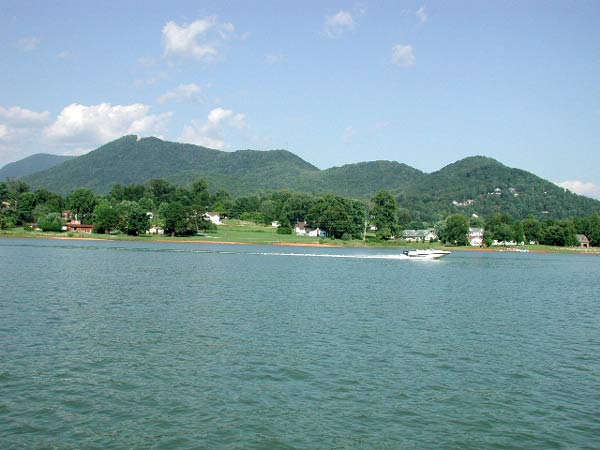
In 1942, the TVA constructed a 2,950 foot earth fill dam across the Hiawassee River, forming Lake Chatuge.
The record in the Towns County Herald on Thursday, May 29, 1941, states:
"The Tennessee Valley Authority, faced with a serious shortage of electric power for defense industries in the southeast, has requested $51,000,000 for the construction of four new dams on the Hiwassee River at the Barnett Bridge in North Carolina (just over the Towns County, GA, line.) Two of the proposed dams will be storage dams, while the other two will be power dams. The one affecting this county most will be a storage dam. Indications point to early start on the construction of the dam..."
On July 17, 1941, the Senate passed the TVA bill, paving the way for construction to begin in earnest. "Water contour lines have been surveyed and the markers show that Hiawassee, the town so reported as being in danger of complete inundation, will be able to keep doing business at the same old stand. The land acquisition men are still working on deeds and titles at the courthouse in Hiawassee. Orders to go to work on the dam are expected any day."
Construction of the earth-filled Chatuge Dam across the Hiwassee River about three miles southeast of Hayesville, NC, began on July 17, 1941. The TVA dams brought badly needed jobs for local folks in the lingering post-depression years, which was a definite boost for the local economy. The construction of the Lake Chatuge Project incurred 1,521,831 man hours of labor. During the construction 1 man lost his life, and 24 suffered injuries. Of course, the folks whose land lay in the path of the lake were not so happy. Gone forever were the approximately 3,700 acres in Clay County, NC and 3,500 acres in Towns County, Georgia. It was the area's richest and best farmland from which the residents had gleaned their livelihoods. Churches and schools were interrupted and moved, 532 grave sites had to be relocated. The January 9, 1942 issue of the Towns County Herald, stated that "...141 houses had to be moved ...about 60 families have left the county--affected directly or indirectly by the building of the dam."